
AI Meets Rhapsody (and I Meet Welsh Hedgerows)
Mercury Rising: AI Meets Rhapsody (and I Meet Welsh Hedgerows)
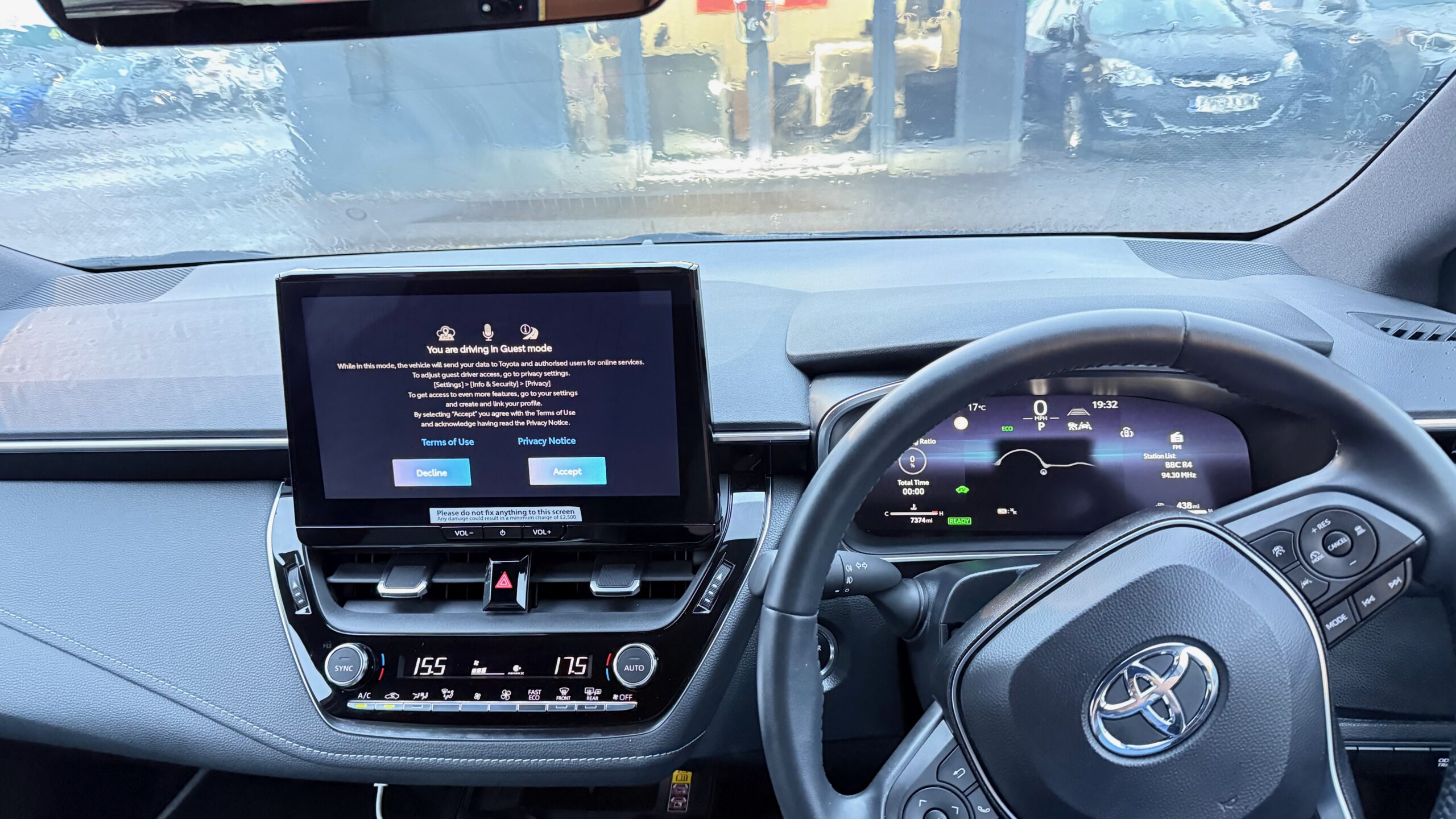
Flying into Bristol, picking up a rental car, and immediately remembering why left-hand driving on narrow Welsh roads is… an experience. Destination: Usk, Wales. Purpose: work stuff that I can’t talk about in detail, but let’s just say it involved some interesting conversations about the future of systems engineering.
The drive from Bristol to Usk was like being dropped into an episode of “Escape to the Country” (which, yes, Jannie and I watch religiously). Rolling green hills, stone cottages, roads that seem designed for horses and carts rather than rental cars driven by confused Dutch guys trying to remember which side of the road they’re supposed to be on.

Every turn felt like I was about to meet a tractor head-on, or worse, scrape the rental car against one of those ancient stone walls. But somehow I made it to Usk in one piece, which is more than I can say for my nerves.
Mercury: When AI Meets Model-Based Engineering
Which brings me to why I’m really writing this post. While I was navigating those Welsh country lanes, my colleagues back home were putting the finishing touches on something we’ve been working on for a while: Mercury, our latest extension to Rhapsody.
Now, before you roll your eyes and think “Oh great, another AI thing,” hear me out. Mercury isn’t just AI for the sake of having AI. It’s AI that actually does something useful for us systems engineers.
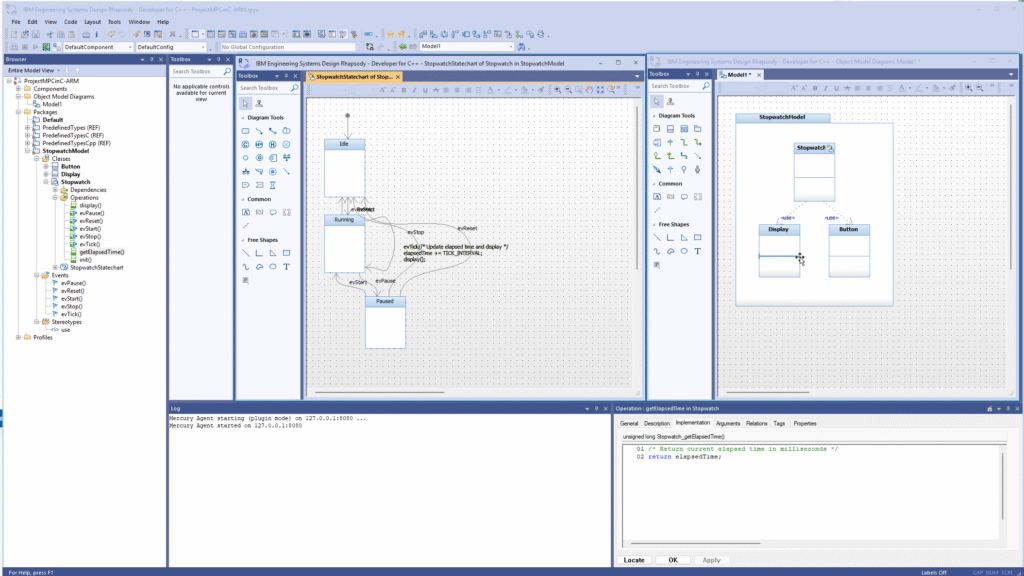
What Does Mercury Actually Do?
Simple version? You can write your requirements in natural language, and Mercury will generate a model for you. Not a perfect model—let’s not get carried away—but a decent starting point that you can refine.
Think about it: instead of spending hours creating class diagrams from scratch, you describe what you want in plain English (or Dutch, or German, or whatever), and Mercury gives you something to work with.
“I need a system that manages user authentication with role-based permissions and audit logging.”
Boom. Mercury creates the basic structure. Classes, relationships, interfaces. You still need to refine it, add the details, make it actually work—but the tedious initial setup? Done.
Reverse Engineering That Actually Works
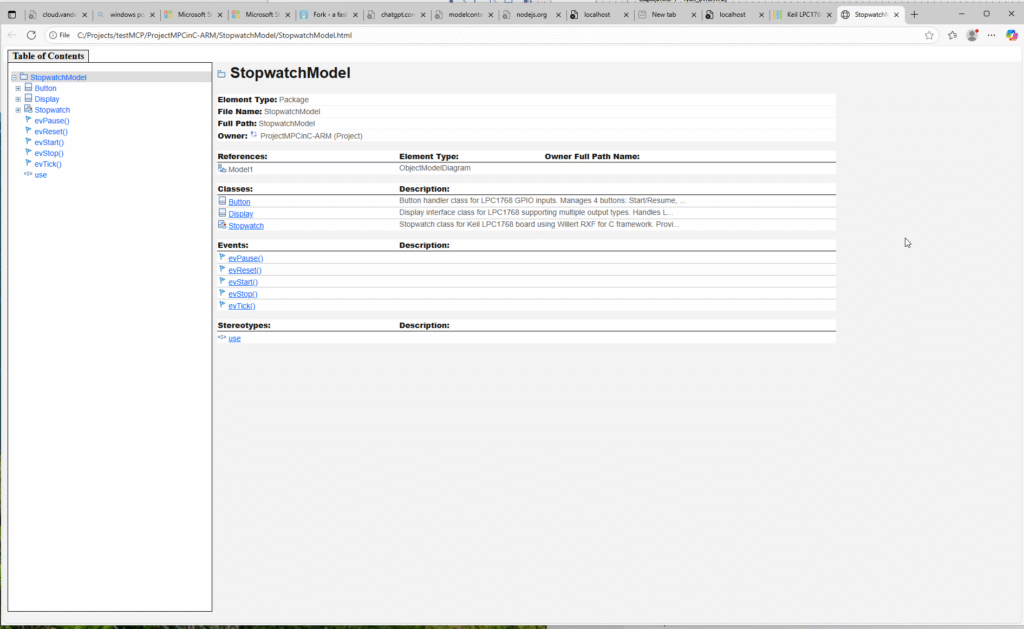
But here’s where it gets interesting (and where I stopped thinking about Welsh hedgerows for a moment). Mercury can also work backwards. Give it existing code, and it’ll create models and documentation.
You know that legacy system everyone’s afraid to touch? The one where the original developer left three years ago and took all the knowledge with them? Mercury can help make sense of it. It’ll read through the code, identify patterns, create UML diagrams, even suggest what the requirements might have been.
Is it perfect? No. Is it better than trying to reverse-engineer a 50,000-line codebase by hand? Absolutely.
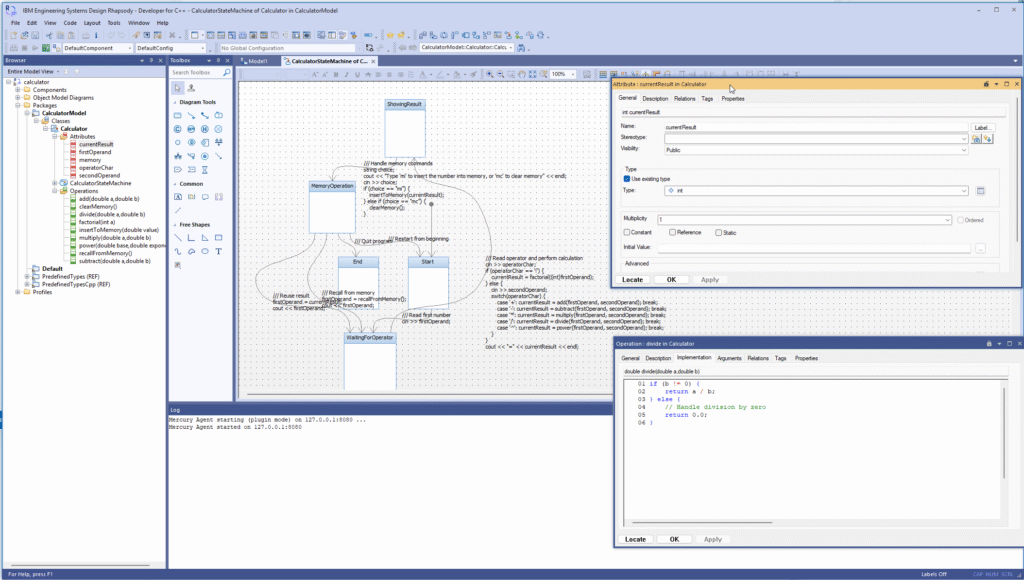
Requirements and Traceability
And then there’s the requirements side. Mercury can read your existing requirements documents (yes, even those Word documents everyone pretends don’t exist) and create proper traceability matrices. It can spot inconsistencies, identify gaps, even suggest test cases based on the requirements.
Remember those three-hour meetings where you try to figure out which requirements are actually implemented and which ones are just wishful thinking? Mercury can do a lot of that legwork for you.
The Welsh Connection
Sitting in a pub in Usk that evening (after successfully navigating more narrow roads without major incident), I was thinking about how both AI and Welsh country roads require a certain amount of trust. You have to trust that the AI understands what you’re asking for. You have to trust that the road actually goes somewhere and isn’t just going to end in someone’s back garden.

With Mercury, we’re not trying to replace systems engineers. We’re trying to give them better tools. The same way GPS doesn’t replace the need for a driver, but it sure makes navigation easier (even on Welsh country roads).
First Impressions
I’ve been playing with Mercury for some time now, and honestly? It’s promising. Not revolutionary—let’s not oversell this—but definitely useful. It’s like having a junior engineer who never gets tired, never complains about documentation, and doesn’t mind doing the boring setup work.
The model generation is surprisingly good for simple systems. Complex stuff still needs human intervention, but for getting started? It beats staring at a blank Rhapsody workspace.
The reverse engineering is where it really shines. I fed it some automotive code we’ve been working with, and it produced documentation that was actually readable. Not perfect, but readable.
The Reality Check
Will Mercury solve all our systems engineering problems? No. (I feel like I say this a lot, but it’s always true.) Will it make some tasks less tedious? Yes, and that’s enough for now.
The AI hype cycle is exhausting, I know. Everyone’s promising that AI will revolutionize everything, cure diseases, solve world hunger, and probably make better coffee. Mercury has more modest goals: help systems engineers do their jobs with less tedious busy work.
And sometimes, that’s exactly what you need.
Pics or it didn’t happen
Well i have a movie? Does that count?
Back home
My flight left on saturday morning. Who needs weekend when he does amazing things… It was early but really cool. Great visit to Wales. “I’ll be back”!


Final Thoughts
Driving back to Bristol the next day (slightly more confident about the left-hand driving thing), I realized that both Mercury and Welsh country roads teach you the same lesson: trust the process, but stay alert.
Mercury will generate models and documentation that are mostly right. Your job is to spot where “mostly right” isn’t good enough and fix it. Just like driving those narrow roads—the GPS will get you close, but you still need to pay attention to avoid the stone walls.
If you’re curious about Mercury, drop me a line. We’re still in beta, still figuring out what works and what doesn’t. But so far, it’s looking promising.
P.S. – “Escape to the Country” makes Welsh property hunting look much more relaxing than Welsh driving. Trust me on this one.









Have you tried any AI-powered engineering tools? What worked, what didn’t? Let me know in the comments below.