BLOG about IBM Rhapsody. Contains technical information as well as more private travel stories.

Tag: Netherlands

DCUG Day 2026: The Dutch IBM Champions Are Gathering — and They Want You On Stage

If you follow this blog, you know I spend most of my time deep inside IBM Rhapsody and Model-Based Systems Engineering. But there is a whole world of IBM technology and community around that — and this autumn a big part of it is coming together in Amsterdam.

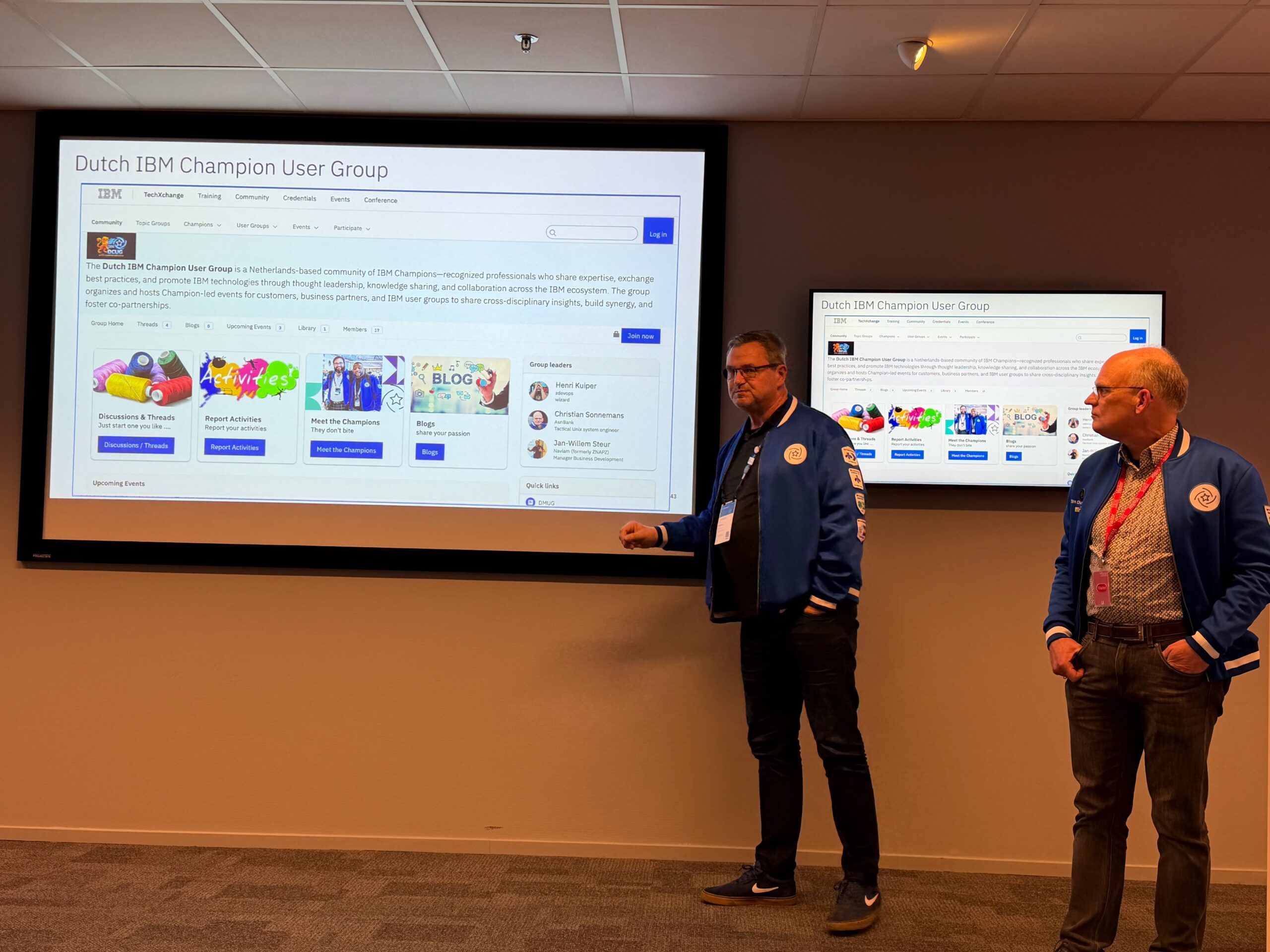
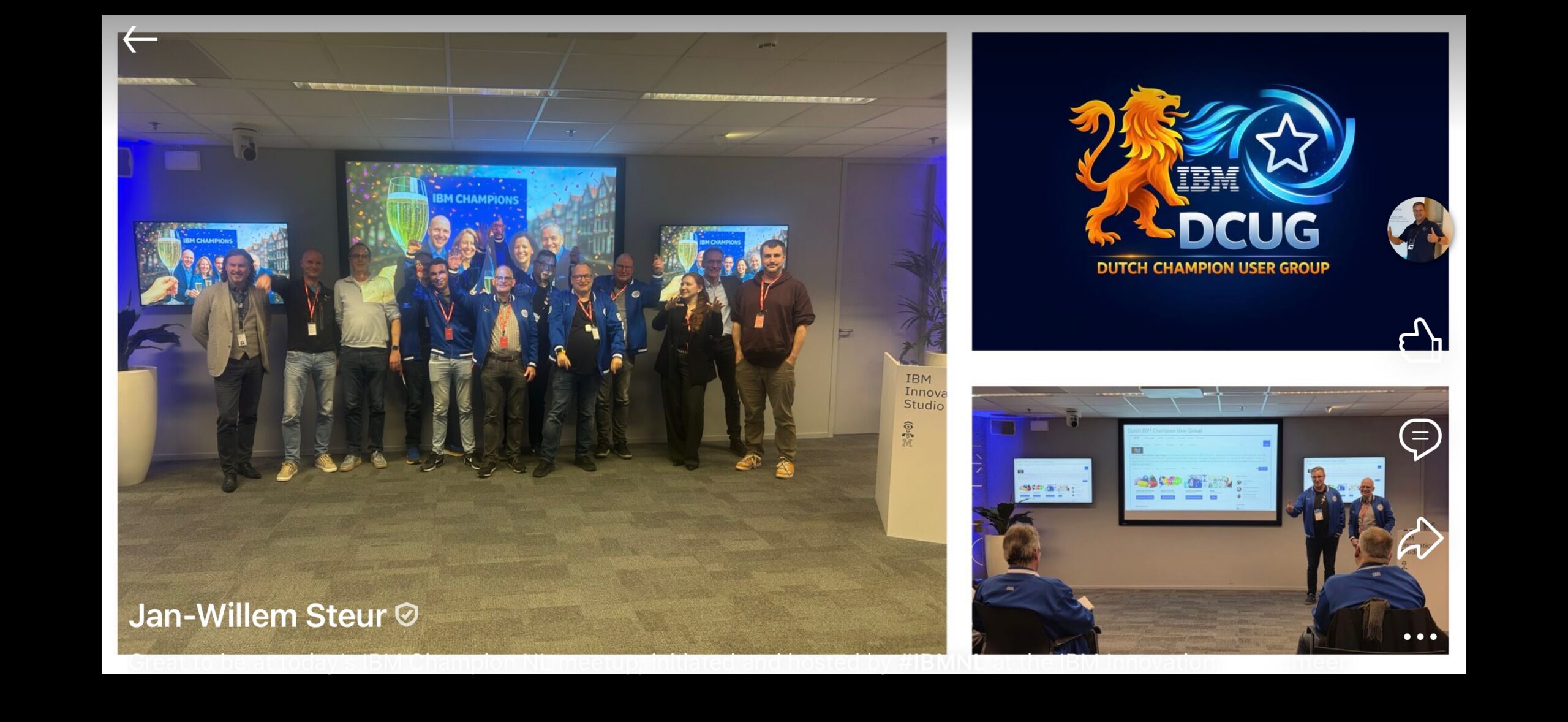
On Friday, 2 October 2026, the very first DCUG Day takes place at the IBM Innovation Center in Amsterdam. DCUG stands for the Dutch Champions User Group — the Netherlands-based community of IBM Champions who share knowledge and enthusiasm across the whole IBM portfolio.

What to expect

A full day of content-driven, non-commercial sessions by and for the community, spread across four tracks:

  • Data & AI
  • Automation
  • Hardware & Storage
  • Cloud

Covering IBM priority areas from watsonx and hybrid cloud to IBM Z, IBM i, Storage and Power. It is the kind of day where you learn something new in every slot and bump into exactly the people you needed to talk to.

📣 Call for Papers — extended to 14 August 2026

Here is where you come in. The Call for Papers has been extended to Friday, 14 August 2026. If you are an IBM Champion with something to share — a real-world story, a technical deep-dive, a lesson learned — consider this your invitation to the stage.

Sessions are short and punchy: 25 minutes plus 5 minutes of Q&A, preferably in English. Send your title, a short abstract, your preferred track, session language and speaker information to the organisers (all the details are on the DCUG site below).

And yes — if your world is systems engineering and modeling, there is absolutely a place for that conversation here. The IBM ecosystem is broad, and cross-pollination is exactly what these days are for.

Join us in Amsterdam

Whether you want to speak or simply come along and connect, mark 2 October in your calendar. All the details, the full Call for Papers and submission instructions are on the DCUG website:

👉 DCUG Day 2026 & Call for Papers on dcug.nl

See you there!

Dauwpop & using Rhapsody code in a library

Traveling Modelers also need vacation once and a while. So last week I had that! And enjoyed it at home. The only thing I did was visiting a Music Festival. But that was on walking distance from my home. It’s called “Dauwpop” which means “Dew Pop”, dew as the stuff that makes the grass wet in the morning and Pop after Popmusic.
It is called that way because in the Netherlands we have a tradition on Ascension Day: “Dauwtrappen”. That is to step on the morning dew. And that is what happens. On that day, mostly young people, go out very early and walk or ride bikes. They do that while taking drinks and stop regularly to drink something.

The festival also starts in the morning although not that early… My main reason for going was that M<Ali Jazz (from Faithless) would be there with a DJ session. But he cancelled last minute. Bad luck, but I still went there with my 2 sons and we had a great day.

A customer asked us a question via support this week. They wanted to use Rhapsody code in a library. The main code was made in Qt (pronounced “cute”) but they wanted to use Rhapsody for the control logic.

So the code must be compiled and then linked into a library.

That, unfortunately, is not it, some more must be done to get it working.

In the general Tab of a Rhapsody Component there are three selections, “Executable”, “Library” and “Other”. There is only one choice possible here. Both the OXF and the RXF use that to generate different code.

When you only use non-active and non-reactive classes and initialize everything dynamically, you don’t have to do anything. You can then just include the correct .h files where you want to use Rhapsody generated classes. But if you do use static objects you have to call the InitRelations() function that is generated, And if you use state-charts and/or activity diagrams you have to initialize and start the framework.

When “Executable” is selected, Rhapsody will generate your main function (Or a function that is directly called by main, depending on the OS you use) In case of a “Library”, a function is generated to start the framework and to initialize the objects in your model. This is true for both RXF and OXF. (In some RXF Versions this was not totally implemented…. take the generated file for the EXE and use that for the LIB… that’ll work.)

The best way to learn how to do this is to start with a simple model first. Create 2 Components with <Name>_LIB and <Name>_EXE, select “Executable” and “Library” respectively and generate code. I always use beyond compare to compare two directories but there are enough other good working compare tools.

Then create 2 classes (“A” and “B”), connect them using an association, create a third class with a structure diagram to instantiate the other 2 (Don’t forget to create an instance of that class !!) now give them a small state-machine (or activity diagram) and make one of them active.

Again, generate code and see the differences. I made life simple for you…. I made the model and saved it (In Rhapsody 8.1.5, old but probably useable by everybody)

Happy Modeling with Rhapsody

Walter van der Heiden (wvdheiden@sodiuswillert.com)

GroundHague day

Yes, I know, it is originally called Groundhog Day and not GroundHague Day.
And it is officially the 2nd of February and not October 31, I know.
But I had the feeling I was reliving the same day over and over again in The Hague and that reminded of one of my favorite movies.

A couple of years ago I had something similar when I needed a Visa for India. On the first Day I went there it turned out I had not enough information. So I had to return the next day (with the same information) and then after a few hours wait I got my badly needed Visa. Just in Time, the next day was my flight…

This time I needed a China Visa. At the beginning of this year I also needed an India Visa but India had now finally reached the 21st century and switched to eVisa. So the internet and a credit card payment sufficed.

Not so for China. I could send in all information by mail but that would mean I would have to send my passport as well. That would mean I would be without passport for more than 2 weeks. That is not an option with my normal travel schedule. I found out, however, that I can have a second passport just for this reason. Good for next time.

Since I have to be there not only for the 11th AUTOSAR Open Conference but also for the MESCONF, my German colleagues offered to take care of the Visa. But that turned out to be impossible. I am still Dutch and I still live in the Netherlands.

So I used the Public Holiday in Germany to go to the China Visa Office in The Hague. By train, I am not going to drive in my country, takes ages, no parking place and a lot of stress.
The Visa Office was not, as I assumed, in the Chinese Embassy, but there is a (commercial!) office that controls the visa process. The real visa is, of course, issued by the embassy, but the process around it is handled by a third party.

It went a lot quicker than the India one, a short 5 minute wait and it was my turn. So confidence increased. Unfortunately the papers I brought were not sufficient. For Germany they were but not for the Netherlands. They did not accept any document that was not in either Chinese or English (so not the German documents I had) and they needed more documentation from China.
Now another tiny problem was that China was also already closed (They are 7 hours ahead of us) so no chance to getting the needed documents
(I needed an official document from the Commerce Chamber of China that the company I was visiting really existed….) …
So…return the next day, Phil…

The next day I had all info covered. I woke up at 4 to have more time with China, I had already mailed the list I needed the night before, received everything I needed, printed it all together with a new application form and I now hoped it was OK. So back to The Hague with the train.
And… it was, they accepted the application and I received a paper that I needed to collect my passport 6 days later…. Now that was not an option (I had to fly 2 days later)
Luckily they had an emergency procedure. But China does not work fast, they need a full day (And that is the urgent where they left you bleed for, financially that is, €200 ,-)
So… return the next day, Phil…

So the next day I went to The Hague again, now it took only 10 minutes but than I had my passport back with a fresh China Visa. The groundhog did not see his shadow and the winter was over… back home and the time can continue.

Is there any Rhapsody news? Yes there is!!! We have a new promotion movie. Called “single source of Truth”, it is very very nice.

Managing complexity, managing resources, achieving goals: Successful projects in embedded systems / software engineering need powerful, coordinated procedures, tools and competencies. The single source of truth principle is an important element in the context of model-driven engineering.

You can find it on:

Willert Website, YouTube, Vimeo

So… that’s it. Blogging in China is not easy. The Chinese government does not like google, WhatsApp, YouTube and a lot of other sites where we normally work with. So don’t be mad if you don’t see much of me next weeks.

Happy Modeling with Rhapsody!

Walter van der Heiden (wvdheiden@willert.de)

020 and 8.3.1

Helemaal niks in 020

People who know me will recognize the title at least partly. Because I was born in the best city of the Netherlands, Rotterdam, I will never pronounce the name of our capital. That city becoming capital is a capital mistake… (pun intended)
The Dutch government houses in The Hague, a beautiful city at the coast of the Northsea, so it would be logically that The Hague (Or ‘s Gravenhage as the official name is) should be the capital. Nobody really understand why it isn’t.
The rivalry between Rotterdam (010 btw) and 020 is of course very football related. “Helemaal niks in 020” is “Totally nothing in 020”. We in Rotterdam sing that if the 020 football team has another year without a prize. The 020 “fans” still think they are the best.
But OK, it is our capital and we have to live with it. And sometimes I have to visit it (I even worked there for 7 years…) since I had guests from the United States and they all want to visit that.

Tourists

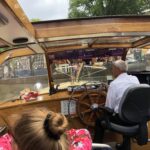
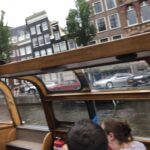
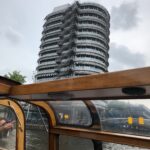
So I organized that a friend of mine who happens to live here, the poor guy, would guide us around in the city. And we do that the tourist way. A walk through the center of the city and the same but then by boat. I can really recommend doing that, it’s really cool, admitted. A few visits to a terrace and a few beers. And of course to the Hard Rock Cafe. NO!!!, I did not buy a t-shirt. I will not wear that. The only HRC shirt I don’t have and never will have.

Any Rhapsody news?

Yes!! 8.3.1 is on the way, I have a beta version installed already, looks cool! AUTOSAR 4.3.1 is supported and what I like very much is the new bridges. Rhapsody can now, finally, create a small bridge in the diagram when two lines cross. Simple change but looks way better. The double click to enter stamp mode in a diagram is also really cool and saves you time when creating diagrams with a lot of similar elements. The quick navigation improved so you can switch to diagrams with a single click on an element.
The API is improved, you will not notice that much but the use is now in line with the Microsoft guidelines. There is now support for Visual Studio 2017 and.. there is a setting to let Rhapsody save in the old file format by default.
We are going to thoroughly test the new Rhapsody and I keep you informed when we release this version to all of our customers.


That’s it! Happy modeling with Rhapsody!

Walter van der Heiden ( wvdheiden@willert.de )

Pearl Jam

It’s a tough job but somebody’s got to do it…

Sometimes life is good, sometimes life is awesome. I had a busy week, hence the limited BLOG entries, but during this week I had time to travel to 020 (That’s how I call the city that became our capital by a “capital” mistake see: 020 and 8.3.1)
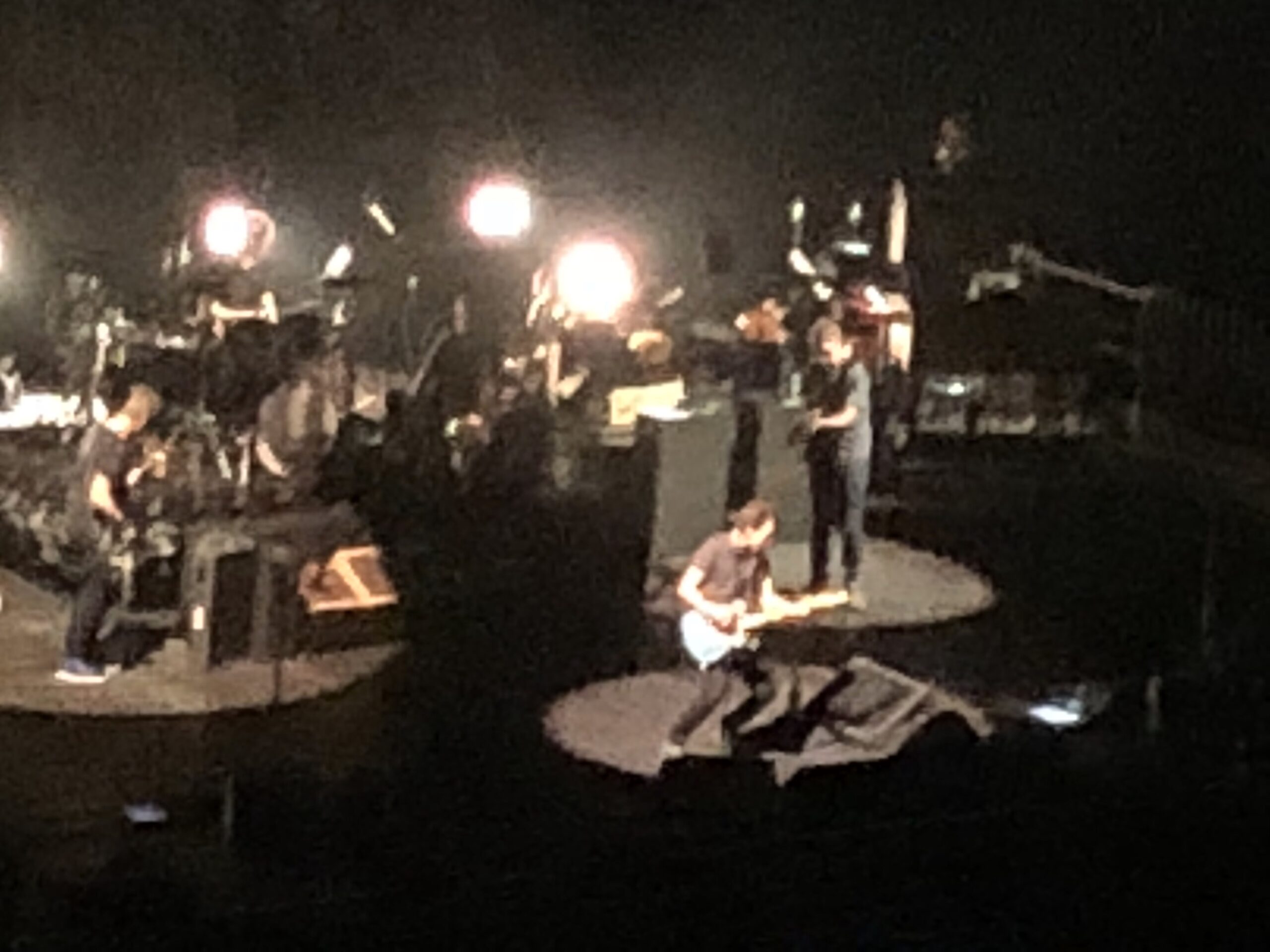
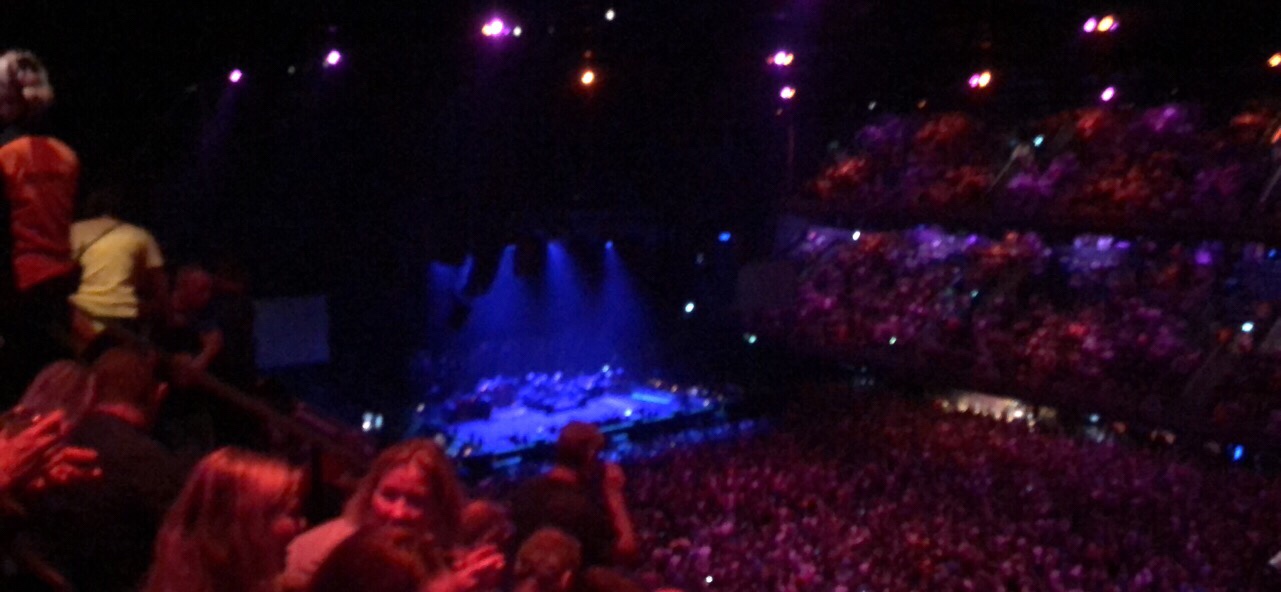
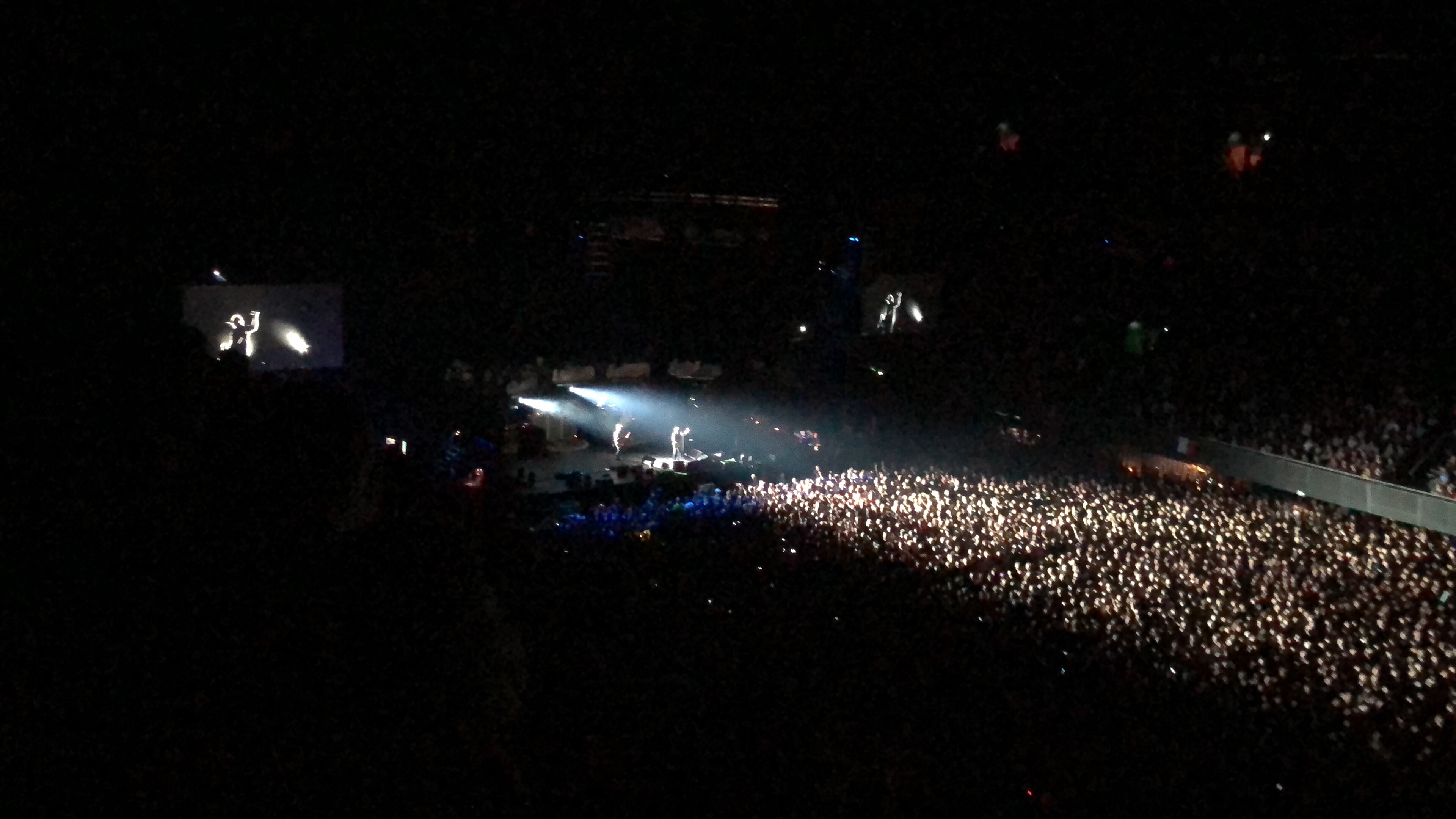
Then why go there? Well there is a place called Ziggodome where lots of concerts take place, On Wednesday it was the time of Pearl Jam, one of the bands I love.
Their first album “10” was one I played over and over and I still do that.

When I saw they were performing in the Netherlands I was sitting behind my computer at the start of the sale to get tickets. Unfortunately I could only get 2 tickets… Better than nothing I thought…

Unfortunately I also noticed that I had visitors from the US in that week that I could not shift. So I was already thinking of selling my tickets but when I told my guests that they all shouted: “Can you get more tickets”? Yes I can… 😉

So I traveled from the office in Bückeburg to “Nul Twintig” together with my American friends. A nice drive, about 350 kilometers. We ate a burger at the Burger B*tch (Not kidding, that is the real name, just google it) drank a beer and attended the awesome concert. Life is good.

What does this all have to do with Rhapsody? Nothing directly… but my friends are also Rhapsody and modeling people. Not only that, there were 2 Automotive Spice experts and another AUTOSAR expert. So we used all traveling time very useful with some interesting discussions on how to do ASpice with Rhapsody, how to import and export Rhapsody UML information to and from ARXML, how to do a model transformation from SysML to AUTOSAR and back with traceability links. We only stopped discussion when Eddie Vedder was singing. That was just too good. Love Rhapsody but I also love Pearl Jam.

So. Happy modeling with Rhapsody. one is Alive in Even Flow….

Walter van der Heiden ( wvdheiden@willert.de )

AUTOSAR in Noordwijk

Introduction

Lately a lot of automotive companies reach out to us for help with their development. Mostly their problem is that in spite of all the (expensive!) tools they use, they still have trouble getting all development done correctly, in-time and thoroughly tested.
I understand that, you can use several AUTOSAR Tools, you can use Simulink or ASCET or TargetLink or whatever, most of these tools do not solve your problems with, amongst others, complexity, timing and architecture.

With AUTOSAR you are able to develop very distributed. That is a big advantage but at the same time also the main problem with it.

Using AUTOSAR does not automatically mean you are using modeling, also modeling does not equal modeling. Using Simulink is completely different from using Rhapsody or another UML modeling tool.

This week I was in Noordwijk together with Clemens to define and implement some of our AUTOSAR/Rhapsody solutions.

How hard can it be?

As the famous Jeremy Clarkson always says when he and his former Top gear, now the Grand Tour, mates are doing something that is nearly impossible: “How hard can it be”.
I can tell you one thing: making software for cars is hard. Very hard.
In my opinion, cars are the most complex thing people build. Not planes or rockets ( The expression, “It’s not rocket science” should actually be: “it’s not automotive software”, IMHO )
Parts of that complexity stems from the fact that the Automotive sector suffers from a drastic price policy. If their purchase department can purchase a CPU that is €0,20 cheaper, they will do that, regardless of the fact that this can skyrocket the effort of building software. Well maybe it’s not that drastic but this is closer than what the Aerospace people do, they only use certified CPU’s. What they cost is pretty irrelevant, you never notice it on the price of a plane and they will only build a limited number of planes, not millions like car ECUs.
Other reasons for complexity is the environment of a car. Planes can fly and therefore already solve the problem of having millions of moving obstacles on their path. Air Control tell the plane where to go, how fast and how high. Makes things much more easy.
So the reason is this complexity, that will only be more now we are implementing autonomous driving.

UML or SysML?

The solution “du Jour” for this is now to use System Engineering or SysML (System Modeling Language) Is this better than UML? That is not a statement that you can make. It depends on what you are doing. I noticed lately that most people ask for SysML but they almost all end up with making software anyway, not systems. That does not mean that you should not use SysML but there are things in SysML that are different. Plus that you have “yet another Tool” and “yet another language” to learn.
So if you can be sure that no-one from any other department than the software guys will use SysML: choose UML. You can also mix SysML and UML (Even for Software development, we are embedded so in the end we always do some systems engineering as well.) The disadvantage is that you often have to do things double. Or put effort in model transformation or intelligent “helpers” that convert and link your model elements. (e.g. like the Harmony profile does)
But OK… since the UML has (still) not reached the critical mass in users, I gladly accept SysML (Which is nothing more than a UML profile) as the UML savior.

Multiple captains on one ship

That’s one of the problems with the multi-tool approach. It is generally a good idea to use the right tool for the right task. Unfortunately all tools think that they are capable of doing everything, which they are most definitely not. It’s like having 2 or more captains on a ship shouting contradictory commands.
The only way to use multiple tools where you have development information that is used in different tools is when you:

  • use automatic synchronisation.
  • use a tool that help you connect the information
  • use a very rigorous process that tells you where the information is created, kept, supplemented and changed.
  • Automate as much as possible

AUTOMOTIVE Spice

There is, luckily a process that you can use for development. This is a big help in defining your artefacts and how to store and process them.
Not really easy to implement but hey: we do complex stuff, this is never going to be easy. I could write a book about this but I won’t. Not here. You can read all about Aspice here.

Rhapsody can do AUTOSAR, can’t it?

Exactly. It can. You can load an AUTOSAR profile (Most AUTOSAR Versions are available) and then you can import and export ARXML files. You are no longer using UML, you use AUTOSAR. And you can model it, draw diagrams, make connections add AUTOSAR artefacts. You can even use UML State-machines you first have to create a so-called RIMBO (Rhapsody Implementation Block) and connect that to all AUTOSAR connectors.

You have to consider a few things. The ARXML import/export is using Java and uses a lot of memory. It turns out that Rhapsody 64-Bit is really much faster when importing or exporting ARXML. If you use Rhapsody 8.3 you’re OK, you can use the 64-Bit. For older versions you can still install the 64-Bit version just for import and export and do the modeling in the 32-Bit version.

If this is the solution, I want my problem back

This is not always the most optimal solution. In my opinion people want to use a UML/SysML tool because they want to use UML/SysML. And that is what you can do. The Willert Automotive Profile for Rhapsody delivers you the possibility to implement other use-cases with Rhapsody. You can use Rhapsody to:

  • implement functionality that uses state-machines and/or Activity diagrams with Code generation. The Automotive RXF is small and fast and will be called in your system in the form of 2 runnables. The names are imported from an ARXML file that you create with another AUTOSAR tool like ArcCore or so.
  • You can also model your AUTOSAR application in UML in Rhapsody, the stereotyped model elements can then be exported as ARXML and used in other AUTOSAR tools.
  • We have defined a base model that includes many Automotive modeling examples, that shows a lot of modeling best-practices and already some very useful helpers.

There are some limitations to using this, not everything is possible (yet). We are working on automatically generating code for communication between runnables (Sender/Receiver ports) You can do this by hand now, however.

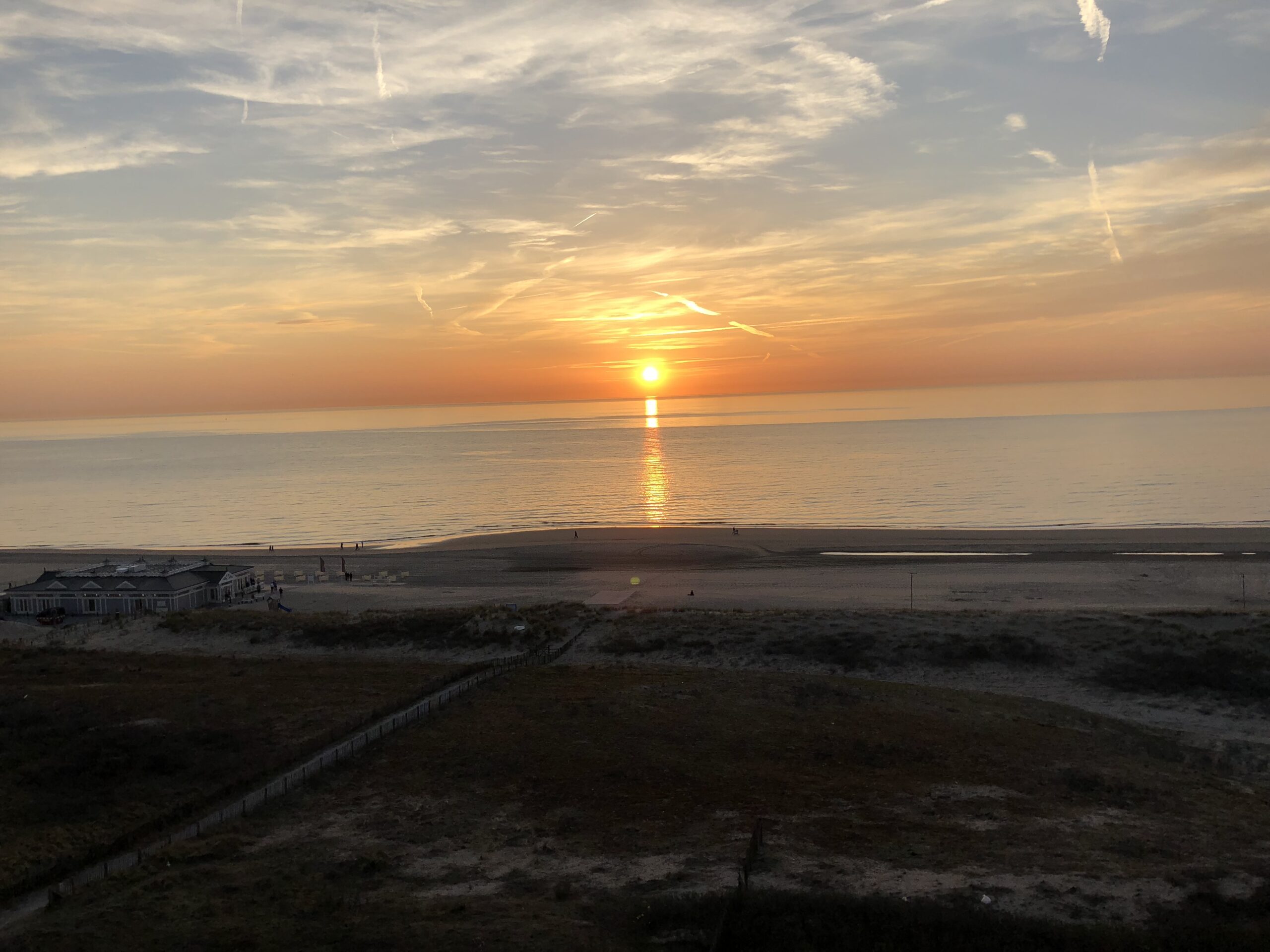
OK, we also walked on the beach, drank a few beers in a beach club but we worked very hard on the Willert Modeling for Automotive Solution! In one of my next BLOG entries I will take you through a complete automotive example.

Happy modeling with Rhapsody!

Walter van der Heiden (wvdheiden@willert.de)


Moving Rhapsody

Kings Day

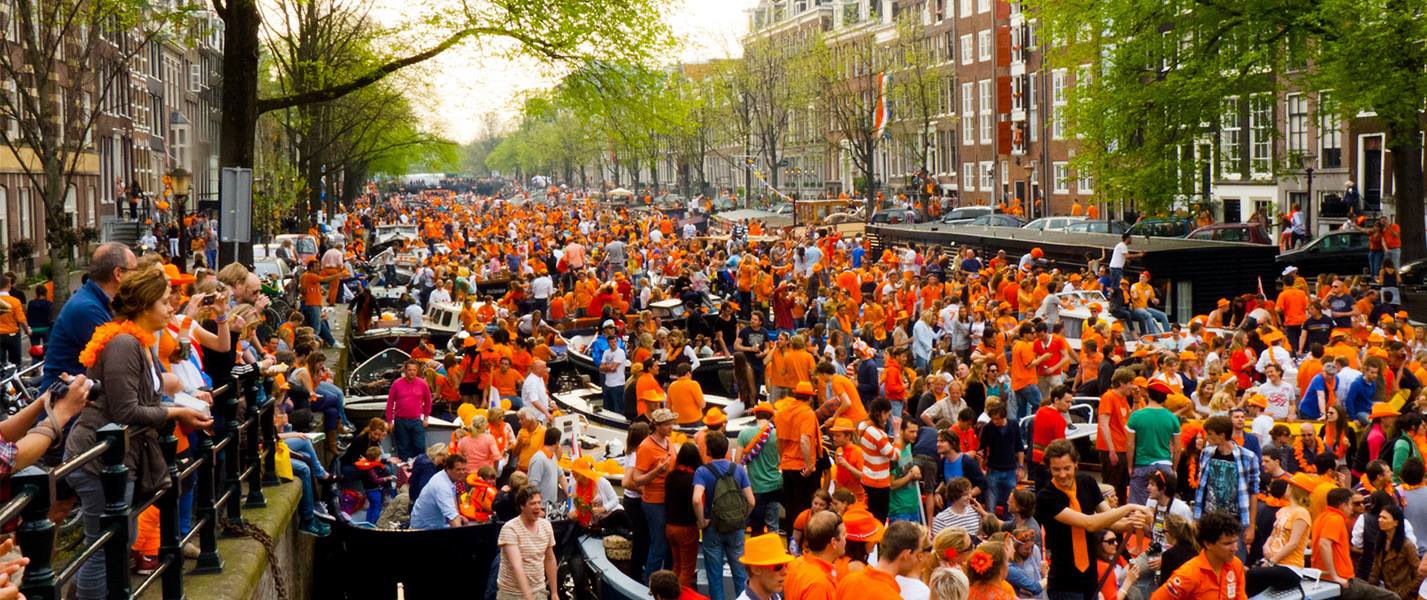
Today is Kings Day in the Netherlands. We celebrate that our King (“Willem Alexander” but we may call him “Willy:) has his birthday. That is quite a party over here, I can certainly recommend being in the Netherlands on that day (and the night before)

Koningsdag-Op-Vrijdag

Kings Day Party in the Netherlands

So everybody in the Netherlands has a day-off. Unfortunately I work in Germany… so I have to work. Therefore I have many other holidays that are unknown to the Dutch…

Willy en Familie.jpeg

Willy and family

Happy 51st Birthday, Willy!

How to move Rhapsody (or parts of it)

I’m sure it has happened to you and it did happen to me yesterday. I always install Rhapsody in “C:\Dev Tools” (Yes, with a space, we need to test that…)  but I mistyped (These characters get smaller every year….) and I typed: “C:\De Tools”.
The cowards way out is to de-install and then re-install.
I decided to try out if i could repair it…. As the Germans say: “Nur die Harten kommen in Garten” (Means something like: “Only the tough ones go to heaven”)

I just moved all files and then started thinking that I might have traces left in the registry. So i started…. not regedit. That is a bad tool, come on Microsoft… you can do better. If you dump a very bad idea known as “The Registry” on us, then give us something useful to work on it.
luckily there are better tools, I have the pro version of Registrar (there is a free version that works fine) where you can search and replace in the complete registry. And much more.

So I searched and replaced “c:\De tools” with “c:\DevTools” and it started to look better. Of course i had to repair the shortcuts and now I also “moved” the Rhapsody “Share” directory, Rhapsody was whining when I started it. I had to edit the Rhapsody.ini and the DiffMerge.ini files. Then it was OK. This did not really saved time but it was fun to do.

Splitting the Data Directory

What I forgot is that on our development systems we cannot use the convenient way of installing outside of the Windows “Program Files” directories and then “Install all files in one directory”. i did that but because we have to generate install and setup files from our development installation automatically we need to split the directories. So I had to move the “Data Directory”
If you already installed the Data separately it is easier, you only have to edit the Rhapsody.ini and the DiffMerge.ini (Even if you do not use the latter: edit it! If you ever want to use it it won’t work and you have no clue why!)

Moving the “Share” directory

Well… if you have everything Rhapsody in one directory it’s actually a bit more than just the “Share” dir. You also have to move:

  • Share
  • Samples
  • Sodius
  • Gateway,
    • NOT completely… just the “examples” subdirectory!!
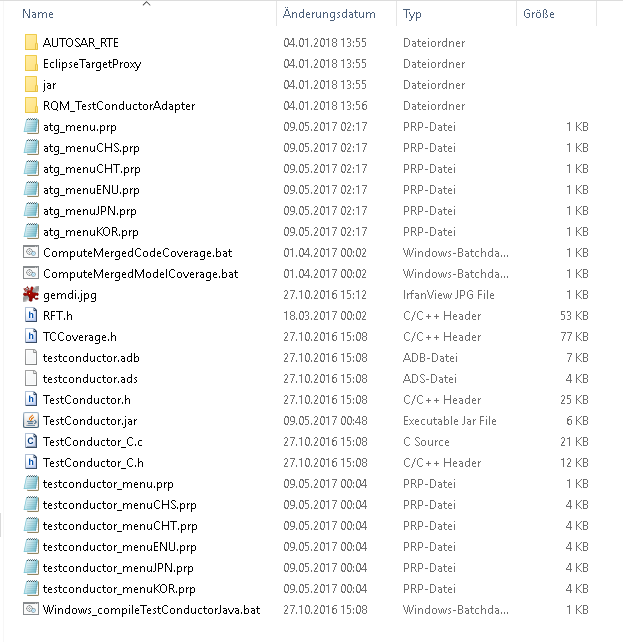
  • Test Conductor
    • A bit more complicated….Screen Shot 2018-04-27 at 10.09.28.png
      This are the files that you have to move to the “Data” part.
  • DiffMerge.ini
    • Search and Replace all instances of the “old” directory
  • Rhapsody.ini
    • Search and Replace some of the instances of the “old” directory, if you had the paths splitted it is easy, if you want to split the installation by hand note this:
      • NOT!!! The paths under the “WelcomeWizard and the WelcomeScreen_Gateway!!! These need to be pointing to the “Program” directory!
      • NOT!! The JavaClassPath and the other Paths under JVM! They also need to point to the “Program” directory!
      • There is also an Entry: “WORKSPACE_ROOT”, you can make that point to a directory where you want to start new Projects by Default!
      • Other directories: check if they point to something that exists…

And then you are OK! At best use a decent editor (Notepad++ or so) and do Search and replace with confirmation.

It does not seem to affect anything but you can repair the Registry so that it seems that Rhapsody was really installed the way you have moved it now.
Just take care that you do not make any mistakes…

Having everything installed in one place is not really making things easy when moving and splitting up Rhapsody. With a decent Registry Editor you can do it quite quick, in case of Test Conductor I think that de-install and re-install (All add-ins can be re-installed! Just call the installer and press “Modify”!) is a lot faster than setting everything by hand.

Note: I installed 32Bit and 64Bit next to each other on one system. Perfectly possible, just rename the Data and program directories (I used 8.3 for 64Bit and 8.3-32 for 32Bit)

Happy Kingsday and have fun modeling with Rhapsody!

Walter van der Heiden (wvdheiden@willert.nl)

© 2026 Rhapsody TechBlog

Theme by Anders NorenUp ↑